Why Britain still weighs itself in stones
The country buys petrol in litres and butter in grams, yet steps on the bathroom scales and reads off a number in stones and pounds. Here is how one stubborn unit survived metrication.
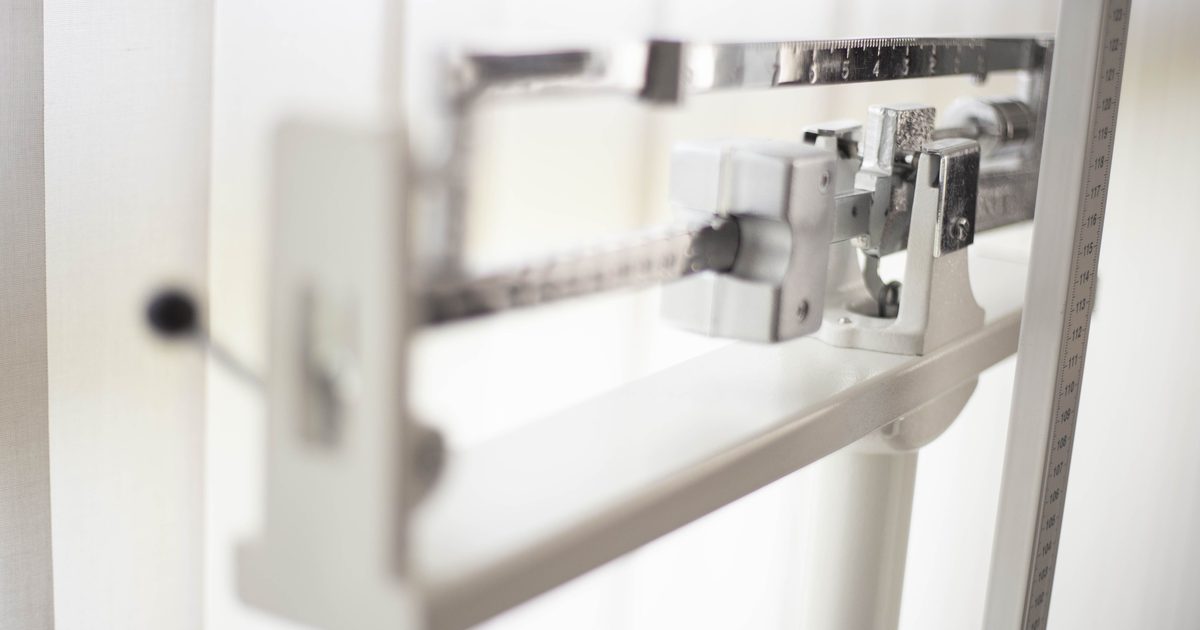
Ask a British adult how much they weigh and you will almost always get an answer in stones. Twelve stone seven. Fourteen stone dead. It rolls off the tongue. Now ask the same person the price of petrol, the weight of a bag of flour or the distance to the next town, and the units scatter: litres, grams, miles. The bathroom scales are one of the last corners of daily life where the old system did not just survive metrication, it dug in and refused to leave.
A stone is fourteen pounds, and that is the odd part
One stone equals fourteen pounds, which works out at a shade over 6.35 kilograms. Fourteen is a peculiar number to build a unit on. It is not ten, it is not twelve, it does not divide neatly into anything modern. That awkwardness is a fossil from the wool trade. For centuries different goods were weighed in stones of different sizes, and a stone of wool was not the same as a stone of cheese or lead. Medieval statutes gradually pinned the wool stone at fourteen pounds to bring order to a market where a fuzzy unit meant a cheated buyer, and that fourteen-pound version is the one that stuck for people.
So the stone you read on the scales is a survivor of a trading standard set to stop merchants arguing about wool. It has nothing to do with the metric system, which is exactly why converting it feels clumsy. Kilograms are decimal, so half a kilogram is 0.5. Stones are not, so half a stone is seven pounds, and the leftover pounds never line up with anything. That mismatch is where most conversion mistakes creep in, and it is the reason a dedicated kg to stone converter saves a lot of head-scratching.
How the stone dodged the metric sweep
Britain has been going metric in fits and starts since the 1960s. The Weights and Measures Act 1985 and the rules that followed pushed shops towards selling in grams and kilograms, and today goods on a scale in a shop are weighed the metric way. Yet the law was mostly aimed at trade, at what happens when money changes hands over a quantity of something. Your own body weight is not a transaction. Nobody is buying you by the kilogram, so nobody had to force the change, and the habit simply carried on.
Culture did the rest. Doctors' notes and medical charts moved to kilograms, but conversations did not follow. People think in the units they grew up hearing, and a target of losing a stone lands with a weight, so to speak, that losing 6.35 kilograms never quite matches. The stone stayed because it was personal, informal and never really regulated out of the places people used it most.
Two islands, two habits
It is worth noting who kept the stone and who did not. In the United States the stone barely registers as a unit for body weight at all; Americans give their weight in pounds alone, so a person is 175 pounds, not twelve stone five. Australia, Canada and New Zealand went the other way and largely settled into kilograms. Britain and Ireland ended up in a curious middle lane, fluent in kilograms on paper and stones in the pub, translating between the two without really noticing they are doing it.
There is no grand plan to abolish the stone, and no great appetite to defend it either. It endures because it is comfortable, and because the maths of switching mid-sentence is annoying enough that a quick converter is easier than retraining a nation's ear. Fourteen pounds to the stone, a little over six kilograms, and a history that runs back to arguments over wool: not bad for a unit that officially should have faded away decades ago.
One stone equals 14 pounds, or about 6.35029 kilograms. Conversions here are rounded; use the converter for exact figures.
Sources
Photo by Paloma Gil on Pexels.
More from Hopi News
Use the tool: Kg to stone converter.